From design to the finished piece
Lumierrante brings together digital design, ceramic 3D printing and traditional processes within a single production workflow. At its Paris workshop, the team develops bespoke pieces for brands, designers, artists and architects, from prototypes to small series. Each production method is adapted to the form, intended use, number of pieces and desired material qualities.
01 Understanding the project
The process begins with an analysis of the design, dimensions, intended use and number of pieces required. The form is assessed against the constraints inherent to 3D printing and ceramics: wall thicknesses, overhangs, assemblies, shrinkage, stability and behaviour during firing.
This initial assessment makes it possible to define a production method, identify the necessary tests and anticipate adjustments to the model.
02 Preparing the form
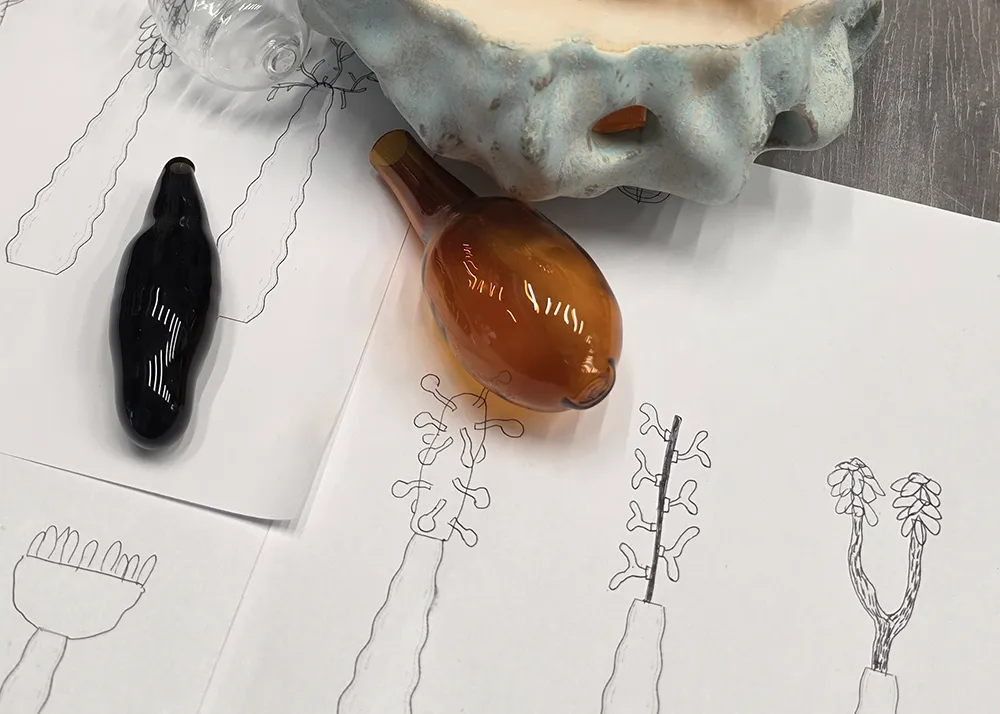
The model is created, corrected or adapted to suit the production conditions. 3D modelling provides control over the overall geometry, walls, interfaces and any assembly systems.
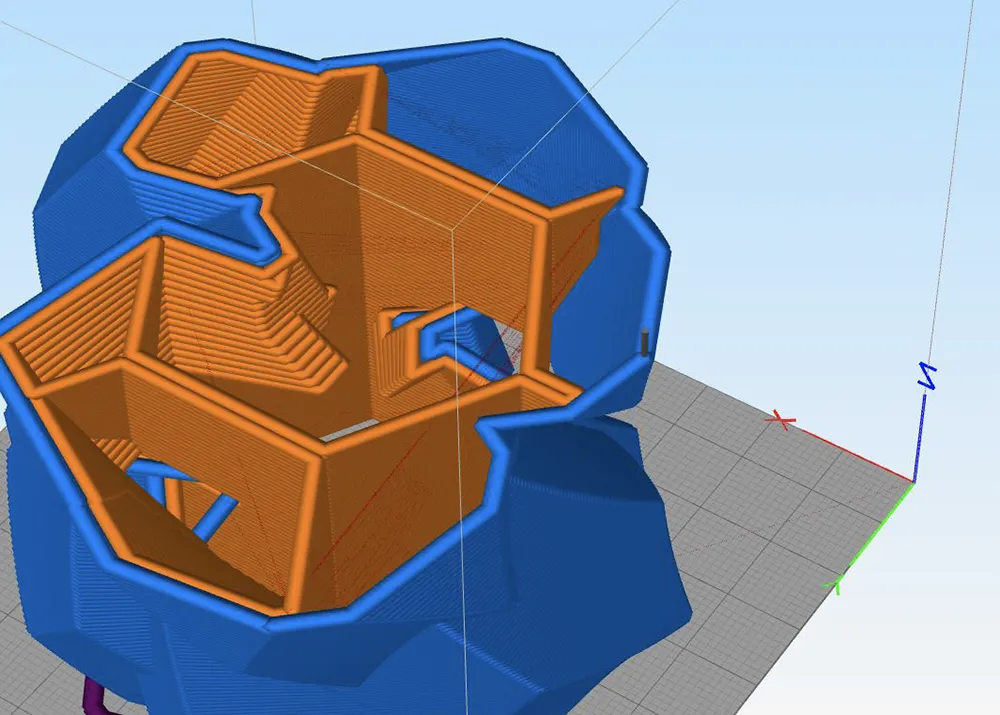
Depending on the project, Lumierrante uses 3D modelling, scanning, parametric design or procedural methods. The file is then sliced into printing paths and translated into deposition parameters.
03 Building layer by layer
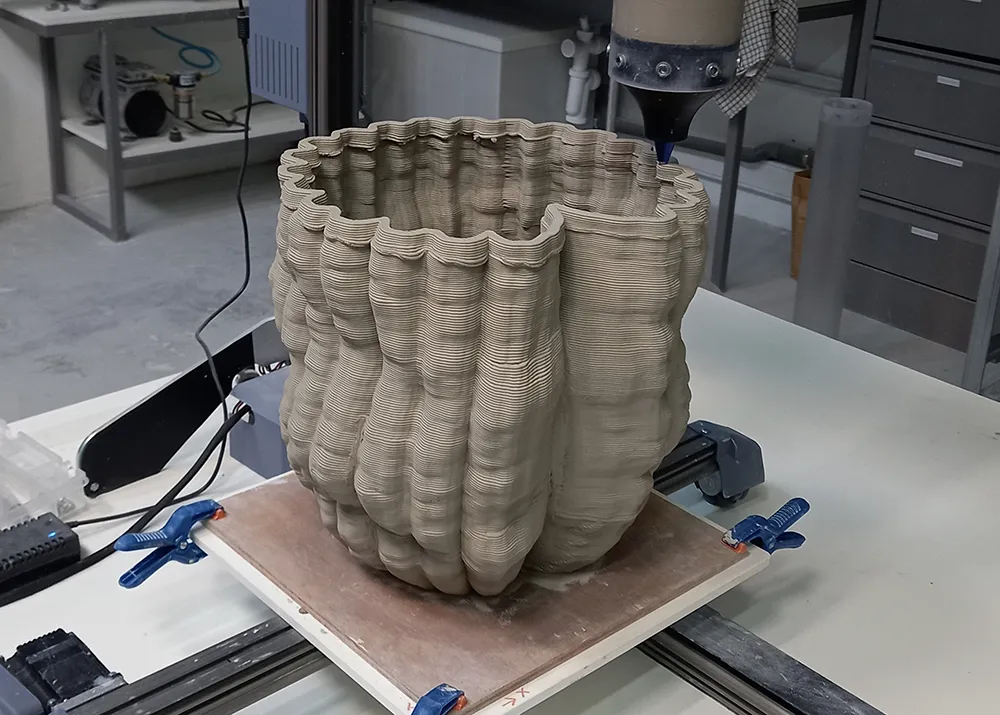
The clay is prepared to achieve the plasticity and consistency required for extrusion. The piece is then built through successive layers of deposited material. Speed, pressure, layer height and setting time are adjusted according to the geometry and material.
The printing process leaves visible traces of production. Depending on the project, this layering may be embraced as a surface quality or reworked during the subsequent stages.
04 Guiding the material
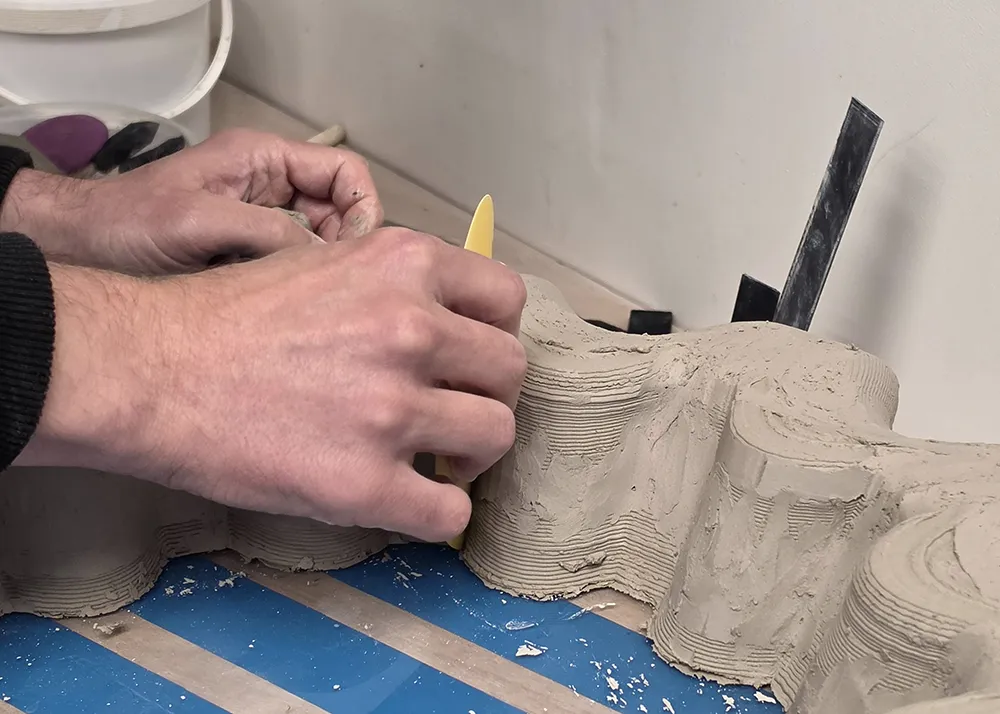
When it comes out of the printer, the piece remains fragile and continues to change. It is dried gradually to minimise stress, cracking and deformation. Drying time varies according to its thickness, volume and geometry.
The surfaces, joints and functional areas can be refined at this stage. When a piece consists of several elements, the assemblies are checked before the first firing.
05 Transforming the surface
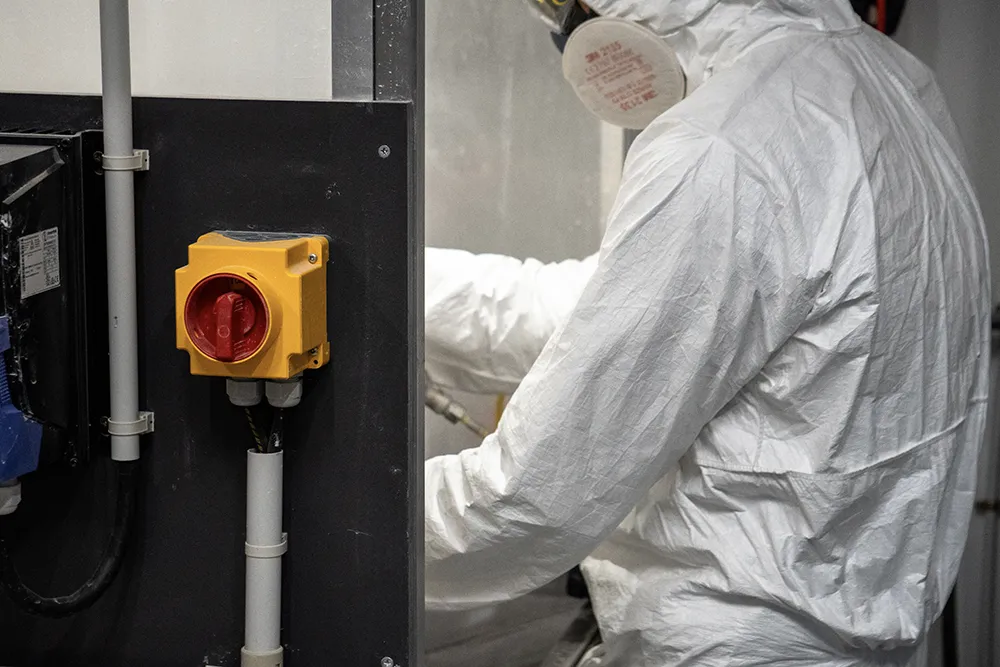
Lumierrante develops a range of high-temperature glazes in its workshop. Colours, textures, gloss and depth effects are refined through a series of test samples, then adapted to the clay body and geometry of the piece.
After the final firing, each piece is inspected, cleaned and, where necessary, assembled with its other components. This final stage verifies that the dimensions, interfaces and finish meet the project specifications.
06 The finished piece
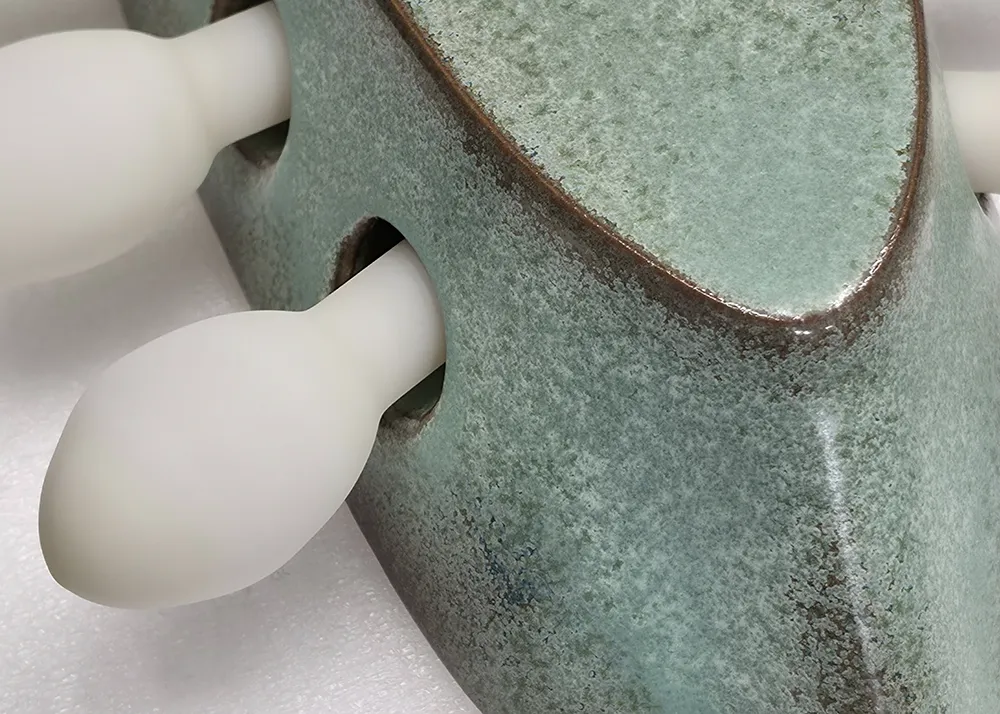
The quality of a piece also lies in the precision of its finish. At its workshop, Lumierrante develops a range of high-temperature glazes, exploring a wide variety of colours, textures, degrees of gloss and effects of depth. Each glaze is selected and adjusted according to the clay body, geometry and intended use of the piece.
When required by the project, a bespoke formulation is developed through a series of samples. After the final firing, each piece is carefully inspected to ensure the precision of its details and the quality of its finish.
The production workflow is not a fixed protocol. It is adapted to the dimensions, intended use, number of pieces and desired material qualities. Testing allows a method specific to each project to be developed progressively.